Timing an entry well has less to do with reflexes and more to do with preparation. The trader who enters at the most opportune moment is rarely reacting faster than anyone else. They typically identified the setup hours or days earlier, defined the exact conditions under which the trade would be worth taking, and then waited for those conditions to materialize. The preparation behind the entry makes it look precise from the outside, because the real analytical work was completed long before the moment of execution. The final five percent of a process that is ninety-five percent patience, structure, and preparation is the speed of pulling the trigger.
Most premature entries share a common origin. The setup looks close enough, the anticipated move feels imminent, and the discomfort of watching price approach a key level without being positioned creates the pressure that overrides the original plan. That pressure is not a market signal. It is a psychological response, the fear of missing a move that has not yet been confirmed. Traders who have not developed the discipline to endure that discomfort enter before their criteria are met and are frequently stopped out by the noise that precedes the very move they correctly identified.
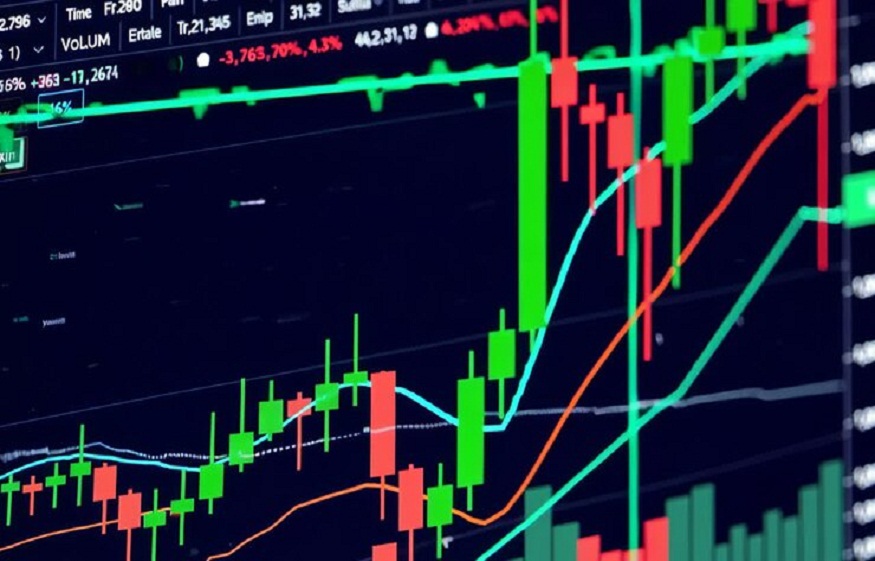
Defining entry criteria with precision is where discipline begins, and TradingView charts provide the visual context in which that precision can be tested. A trader can mark the exact level at which a setup would trigger, the candle close that would signal a breakout, or the retest of a structural level that would confirm continuation. Mapping those conditions visually establishes an objective standard independent of how the trader feels in that moment. Either the chart meets the criteria or it does not, and that binary removes the interpretive flexibility that emotional trading exploits.
Waiting for confirmation is a principle every trader encounters early and most struggle to apply consistently. Confirmation means different things in different contexts, but at its core it means giving price the opportunity to demonstrate the behavior the analysis anticipated before committing capital. A breakout trader who waits for a close above resistance rather than entering on the first touch accepts a slightly worse entry price in exchange for meaningful evidence that the move is genuine. That trade-off is both mathematically and psychologically sound, and simultaneously difficult to execute, because a confirmed candle close sometimes comes at a price too far from the ideal entry to make the risk-reward viable.
Read More : Mistakes to Avoid in writing effective Hr Assignment
Location within a trade is something experienced traders absorb deeply over time, while beginners tend to treat it as secondary. A well-timed entry means positioning at a point where price history shows a clear reaction, where a stop can be placed rationally behind a structural feature rather than arbitrarily, and where the potential reward relative to that stop makes the trade worth taking. It is not a matter of the precise minute or second. It concerns the price location where the risk and reward are structurally justified. Studying how those locations form and recur on TradingView charts is the work that makes identifying them in real time feel natural rather than forced.
Execution discipline compounds in a similar way to analytical skill, but does so more quickly when built on a solid analytical foundation. A trader who knows clearly what they are looking for, who has the patience to wait until it appears, and who has defined their criteria precisely enough to distinguish when conditions are genuinely met from when they are only approximately met, will find that entries become less fraught over time. The anxiety that characterizes early trading, the second-guessing, the hesitation at the moment of execution, are not resolved by the market becoming less uncertain but by the trader’s relationship with uncertainty being fundamentally restructured through the discipline of doing the preparation correctly, every time.